
Gift Tax Annual Exclusion

The gift tax annual exclusion is a planning tool that individuals can use to reduce the size of their gross estates by making gifts during their lifetime. The amount an individual may give free of gift tax to any one person is subject to a limit that is indexed annually for inflation.
The federal gift tax annual exclusion gives individuals and couples a tax-advantaged way to transfer property during their lifetimes to people who would likely be the ultimate recipients anyway. Donors can reduce the size of their gross estates, thereby reducing the federal estate tax and other estate administration costs. The recipients can enjoy the property before the donor’s death, with immediate use of the gift.
How Does It Work?
Every year, individuals may give up to the annual exclusion, $19,000 in 2026, to as many people as they want without making a taxable gift. The gross estate is then reduced by the total amount of these gifts.
For example, Lionel has two children who are married and two nephews who recently graduated from college. He gives $19,000 to each child, the spouse of each child and each nephew - six gifts of $19,000 that total $114,000. Lionel reduces his estate, transfers wealth to family, and avoids gift tax on the transfers.
There’s no limit on the number of people who may receive such gifts. And since these gifts can be made year after year using the annual gift tax exclusion, it can be an effective means of progressively transferring wealth to family members over time.
If the gift exceeds the annual exclusion amount, the donor can use the unified credit to shelter up to $15 million of taxable lifetime gifts or taxable estate transfers (in 2026).
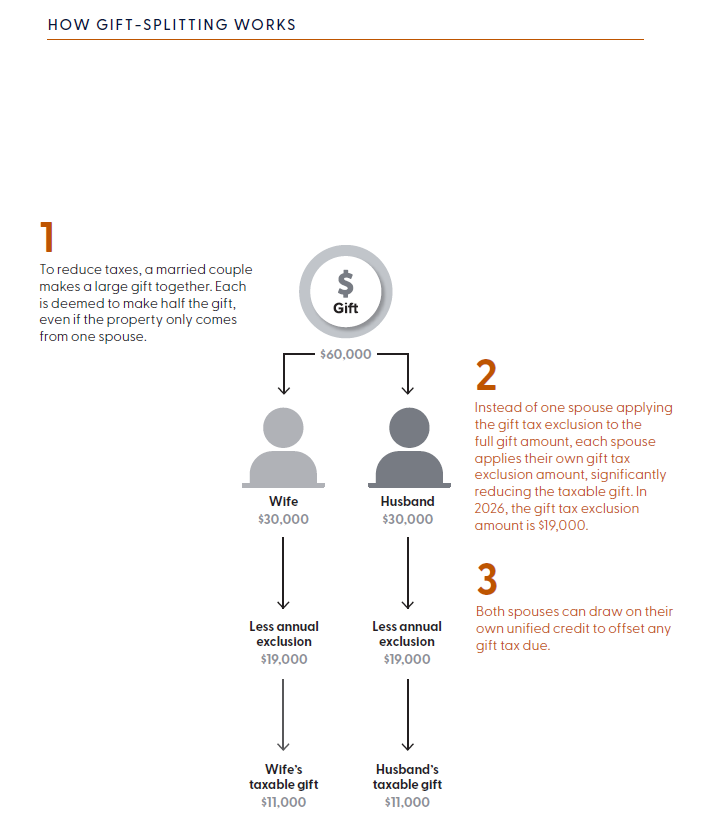
Gift-splitting permits married couples to elect to split a gift that is made from the separate property of only one spouse. This allows the couple to double the annual exclusion available for the gift.
For example, if Oliver wants to give his son stock worth $38,000 in 2026, he and his wife Hannah could elect to split the gift, with each of them using their $19,000 annual exclusion, even though Oliver is the sole owner of the stock. Oliver and Hannah could choose to repeat this scenario in future years.
What Constitutes a Gift?
To qualify for the gift tax annual exclusion, the property being transferred must be considered a completed gift. This means that it must be:
1. Gratuitous. The donor can’t receive something in return or it would be considered a sale, not a gift.
2. Complete. The donor may not retain any control over the property (such as retaining actual possession) or any power to revoke the gift.
3. Voluntary. The donor must choose to make the gift, a transfer required by a court of law or other legal authority is not considered a gift.
Here are some additional requirements:
- To secure the annual exclusion, gifts must be of a “present interest.” This means that the person receiving the gift must have an unrestricted right to the immediate use,
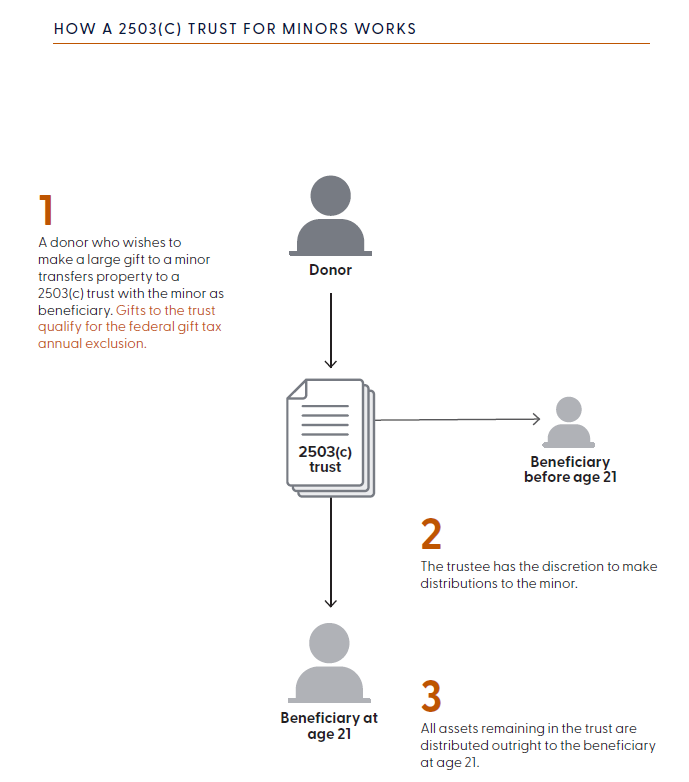
possession or enjoyment of the property after the gift is made. - The present interest rule doesn’t disqualify a gift made to a Section 2503(c) trust for a minor child from the annual exclusion. Even though this technically represents a
“future interest,” the annual exclusion is allowed. - If the gift exceeds the annual exclusion amount, donors may draw on their lifetime gift tax credit to shelter the excess amount from the federal gift tax.
- The lifetime gift tax exclusion and the estate tax applicable exclusion are unified. In 2026, the unified credit will shelter up to $15 million in taxable lifetime gifts and taxable
estate transfers.
The Bottom Line
The federal gift tax annual exclusion provides individuals and married couples a tax advantaged way to transfer property during their lifetimes to people who may likely be the ultimate recipients anyway. It lets recipients enjoy property sooner, and provides “givers” a way to both reduce future estate taxes and have the satisfaction of making lifetime gifts.
This content is developed from sources believed to be providing accurate information, and provided by Wealth Manager Group. It may not be used for the purpose of avoiding any federal tax penalties.
This information is not intended to be a substitute for specific individualized tax or legal advice. We suggest that you discuss your specific situation with a qualified tax or legal advisor.
The opinions expressed and material provided are for general information, and should not be considered a solicitation for the purchase or sale of any security.